How to Decorate a Small Living Room Without Clutter
A small living room can feel open, cozy, and thoughtfully styled when every piece earns its place. The goal is to create comfort without adding visual noise.
Updated March 26, 2026 | 7 minute read
Introduction
Small living rooms are all about balance. You want the space to feel welcoming and personal, but too many items can make it feel crowded. The secret is to simplify the layout, prioritize function, and use a few intentional layers that add warmth without taking up valuable space.
When the room is edited, the best details stand out. Clean surfaces, smart storage, and a calm palette allow even a compact room to feel like a retreat. The ideas below focus on practical upgrades you can do without heavy renovations.
Think in zones, even if the room is small. One seating zone, one storage zone, and one visual focal point is usually enough. When each zone has a clear purpose, the room feels organized and the clutter has fewer places to hide. This also helps you decide what to remove: if a piece does not support a zone, it can probably go.
Small Living Room Decor Ideas
These ideas work in apartments, narrow rooms, and multipurpose spaces. Choose the ones that solve your biggest pain points first.
1. Choose Multi-Functional Furniture
A small room benefits from pieces that do more than one job. Think of seating with hidden storage, an ottoman that doubles as a coffee table, or a slim console that acts as a desk.
- Prioritize pieces that replace two items with one.
- Keep the scale modest so circulation still feels easy.
- Use closed storage to hide visual clutter.

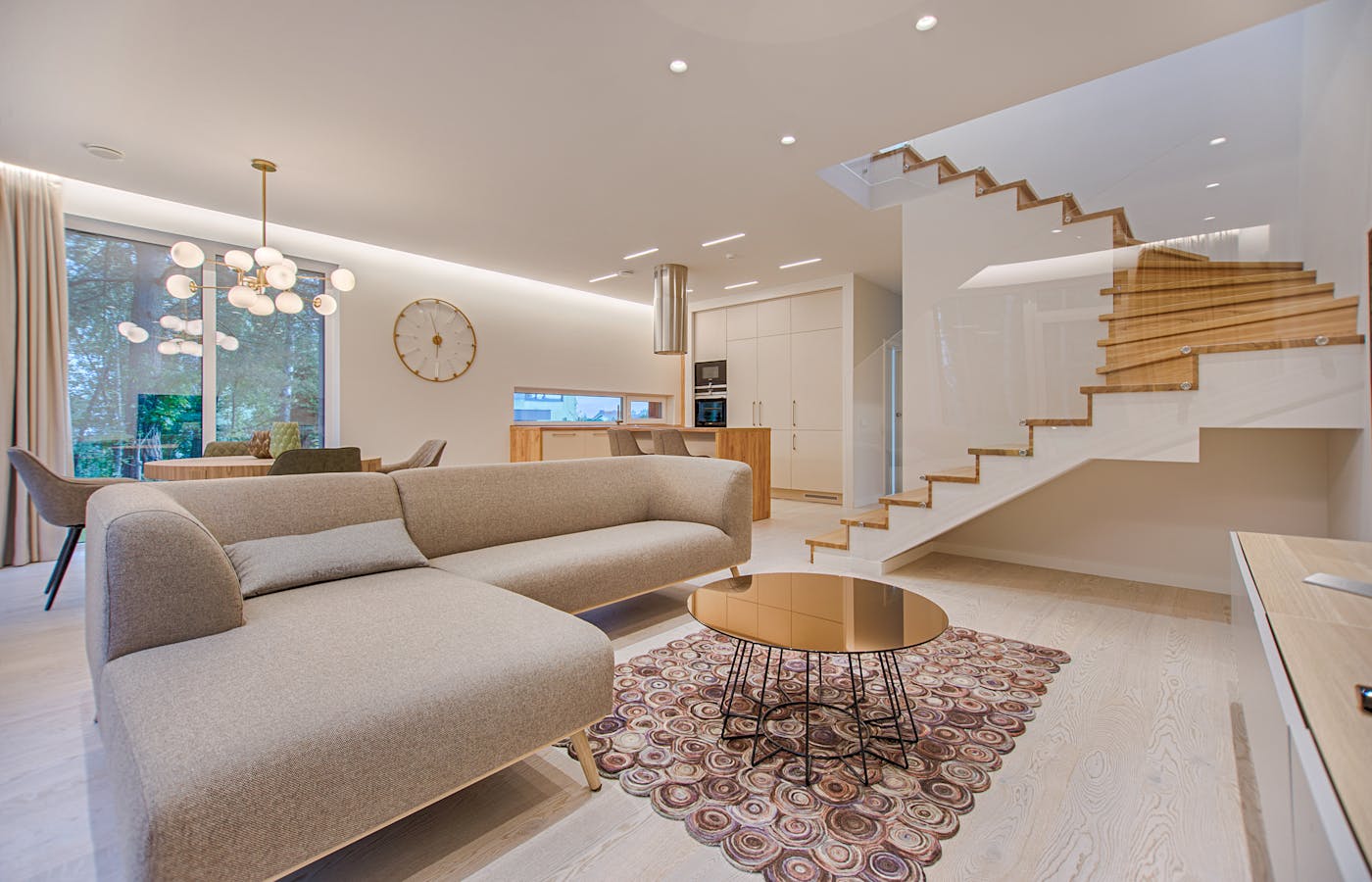
Small living room with multi-functional furniture.
2. Anchor the Room With One Calm Rug
A single rug unifies the seating area and creates a defined zone, especially in open-plan layouts. A calm pattern keeps the room visually quiet and helps hide everyday wear.
- Use a rug large enough for front furniture legs to sit on it.
- Stick to soft patterns or tonal texture for a relaxed look.
- Choose a low pile to keep the space feeling tidy.
3. Float the Sofa When Possible
Pulling the sofa a few inches away from the wall can make the room feel more intentional and airy. This also gives you room for a slim console behind the sofa if you need extra surface space.
- Leave a small gap for airflow and visual lightness.
- Keep side tables narrow so they do not interrupt the walkway.
- Use a console behind the sofa only if it does not block movement.
4. Limit the Color Palette
Fewer colors make a small space feel larger. A quiet palette also lets textures do the work, so the room feels layered without feeling busy.
- Choose one main neutral and one soft accent tone.
- Repeat the same tones in pillows, throws, and art.
- Use black or deep wood sparingly to add depth.
5. Add Vertical Storage and Wall Moments
When floor space is tight, the walls can work harder. Vertical shelving, a tall bookcase, or a simple ledge gives you storage without crowding the room.
- Keep shelves shallow so the room feels open.
- Use a mix of books and a few objects for balance.
- Leave some shelf space empty to keep it airy.
6. Use Light, Leggy Furniture
Pieces with visible legs allow light to pass under them, which visually expands a small room. This also makes cleaning easier and keeps the layout feeling lighter.
- Choose sofas and chairs with raised bases.
- Swap bulky tables for slimmer silhouettes.
- Keep furniture heights varied to add visual rhythm.
7. Create a Soft Focal Wall
A focal wall helps the room feel intentional without adding clutter. This can be a large piece of art, a simple gallery row, or a mirror that reflects light.
- Use one oversized piece instead of many small frames.
- Keep frame finishes consistent for a cohesive look.
- Place the focal item at seated eye level.
Cozy seating and wall decor ideas.
8. Use Baskets and Closed Storage
Open shelves are beautiful but can look busy in a small room. Closed storage keeps everyday items out of sight, which makes the room feel calmer and more pulled together.
- Use baskets in open cubbies to hide loose items.
- Choose storage that matches the room's main materials.
- Limit visible accessories to the ones you love.
9. Keep Surfaces Edited
The smallest change with the biggest impact is clear surfaces. A coffee table or console with a few purposeful pieces feels styled, while too many items feel cluttered.
- Group items in sets of two or three to keep it intentional.
- Use a tray to contain small objects.
- Leave some open space so the eye can rest.
How to Style a Small Living Room
Start With Layout and Circulation
A good layout makes the room feel larger than it is. Leave clear paths around the seating area and avoid blocking doorways or windows. When movement feels easy, the room feels calmer.
If the room doubles as a dining or work area, keep those functions visually light. A slim desk, a drop-leaf table, or a wall-mounted shelf keeps the space flexible and prevents the room from feeling divided into too many zones.
- Keep at least 24 to 30 inches for walkways when possible.
- Float pieces rather than pushing everything against walls.
- Use one focal anchor like a rug or an artwork to organize the space.
Layer Textures Instead of Adding More Pieces
Texture creates depth without taking up extra space. A woven throw, a soft rug, and a matte ceramic piece can make the room feel cozy even with a minimal layout.
- Blend soft textiles with one structured material.
- Use similar tones so the textures feel cohesive.
- Keep the number of accessories small but intentional.
Let Light Do the Heavy Lifting
Light makes small rooms feel open. Use a mix of overhead and table lighting, and keep window treatments light so daylight can flow through the room.
- Use soft, warm bulbs for a cozy glow.
- Place a mirror opposite a window to reflect light.
- Keep lamp sizes scaled to the furniture around them.
Common Mistakes to Avoid
Small rooms are sensitive to visual clutter. These common missteps can make a living room feel smaller and less comfortable.
- Choosing furniture that is too bulky for the space.
- Overloading surfaces with decor or collections.
- Using too many colors or bold patterns at once.
- Ignoring vertical space and leaving storage on the floor.
- Blocking windows with heavy or dark treatments.
Conclusion
Decorating a small living room is about thoughtful editing. When the layout is clear, storage is hidden, and textures are layered, the room feels cozy without feeling crowded.
Start with the essentials, choose multi-functional pieces, and let a few quiet details shine. The result is a space that feels open, welcoming, and easy to live in.